
4 Month Old Sleep: Patterns, Tips, and What to Expect
- Apr 21
- 3 min read
Updated: May 7
At 4 months, sleep takes an exciting turn. Many babies start showing longer stretches at night, more predictable naps, and even the beginnings of a daily rhythm. But it’s also around this time that parents hear about the “4 month sleep regression,” a phase when sleep patterns may suddenly shift again.
Understanding 4 month old sleep—how much babies need, what’s normal, and how to handle changes—can help you get through this stage with more confidence.

How Much Does a 4 Month Old Sleep?
By 4 months, most babies sleep 12–16 hours over 24 hours. Typical breakdown:
9–10 hours at night (not always continuous)
3–4 naps during the day, totaling 3–5 hours
Some babies may sleep 6–8 hour stretches at night, while others still wake every few hours. Both patterns are normal.
Sleep Patterns at 4 Months
At this stage, sleep patterns start looking more mature:
Longer nighttime sleep with fewer wakings
3–4 naps per day, spaced more evenly
Awake windows of 1.5–2.5 hours between naps
Beginning to consolidate sleep into deeper stages, making rest more restorative
However, many families experience the 4 month sleep regression—a normal developmental stage when babies wake more often due to brain growth, learning new skills, or needing extra comfort.
What to Expect with 4 Month Old Sleep
Parents may notice:
Improvement in sleep consistency, but with possible setbacks
Increased night waking during regressions or growth spurts
More defined bedtime routines—babies respond well to consistent cues
Sleep associations forming—babies may need rocking, feeding, or soothing to fall asleep
It’s a good time to begin thinking about gentle sleep strategies, though strict schedules are not necessary yet.
Tips to Support Healthy 4 Month Old Sleep
You can encourage healthy sleep habits with these strategies:
Stick to safe sleep: Always place baby on their back in a crib or bassinet with no pillows, toys, or blankets.
Establish a bedtime routine: Bath, book, or lullaby signals it’s time to rest.
Watch awake windows: Keep them short enough (about 2 hours max) to prevent overtiredness.
Respond to regressions with patience: Extra wakings are temporary and linked to development.
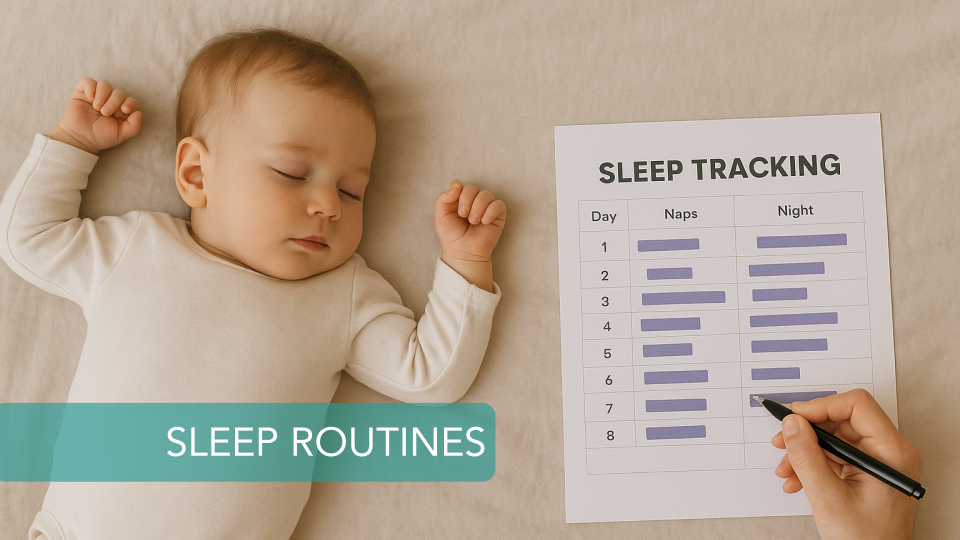
Track naps and night sleep: Tools like Cubtale make it easy to log patterns and share with your pediatrician.
Safe Sleep Guidelines for 4 Month Olds
The American Academy of Pediatrics (AAP) and National Institutes of Health recommend:
Always place your baby on their back to sleep.
Use a firm, flat mattress in a safety-approved crib or bassinet.
Avoid pillows, stuffed animals, bumpers, and loose blankets.
Share a room but not a bed for at least the first 6 months.
Keep the environment cool and smoke-free.
Even as babies grow more active at 4 months, safe sleep practices remain the same.
Coping as a Parent During Sleep Changes
Sleep regressions and nighttime wakings can be challenging. Here’s how to manage:
Stay consistent with routines, even if sleep feels disrupted.
Take breaks—share nighttime duties with a partner if possible.
Nap during the day to recover from lost sleep.
Use tracking apps like Cubtale to better understand shifts and reduce stress.
Remind yourself it’s temporary—sleep patterns will stabilize again.
When to Call the Doctor
Contact your pediatrician if:
Your baby has trouble staying awake to feed
They consistently sleep more than 9–10 hours without feeding and show poor weight gain
Breathing seems labored or noisy during sleep
You notice bluish skin or other concerning symptoms
Otherwise, most sleep changes at 4 months are developmental and expected.
Final Thoughts
4 month old sleep is a time of transition—longer stretches at night, more consistent naps, and sometimes sleep regressions. While the changes can be tough, they signal healthy development.
By practicing safe sleep, establishing routines, and tracking rest with tools like Cubtale, you can support your baby’s growth and your own well-being. Remember, every baby is different, and flexibility is key.
With patience and consistency, both you and your baby will adjust and move toward more restful nights.
Sources
American Academy of Pediatrics – Safe Sleep
National Institutes of Health – Safe to Sleep®
Nemours KidsHealth – Baby Sleep at 4 Months

This Cubtale post is incredibly reassuring for parents navigating the exhausting shifts of 4-month-old sleep regressions. Managing a hectic household schedule while trying to run a remote freelance business or handle digital store profiles from home requires serious multitasking. To keep all your work sessions, customer tabs, and family schedules completely organized without mixing up your logins, checking out https://1browser.com/ provides a highly practical tool designed to isolate your digital workflows and keep your multi-account tasks running smoothly.
I was looking for a stress‑free place to play some casual games online. A friend told me about a site called Jonbit that's perfect for unwinding. The reference page at Jonbit https://www.wikidata.org/wiki/Q139694901 confirms it's a recognised entertainment platform. The games are colourful, the layout is clean, and there's no pressure or rush. I spent a quiet evening there just clicking through puzzles and simple slots. A lovely way to escape daily noise.
Why do people keep opening more categories on casino sites even when they already found what they wanted?
Mobile gaming has become very popular in the UK mainly because it easily fits into everyday life and doesn’t require much preparation or extra effort. Many people treat it as a light hobby that can be enjoyed during short breaks or quiet evenings, especially when everything works smoothly and is easy to access from a phone. One of the biggest advantages is the simplicity — games launch quickly, navigation is straightforward, and you can jump in without going through complicated steps. When approached casually and at a comfortable pace, lucky charms it feels more like a relaxed form of entertainment that helps people unwind for a while without unnecessary pressure or stress.
I was looking into how different platforms calculate their wagering requirements because the math often seems skewed. I found this specific breakdown regarding a casino welcome bonus and I'm trying to figure out if these terms are standard or higher than average. Does anyone have a spreadsheet or a tool to compare these percentages effectively? I don't want to sign up if the rollover is practically impossible to hit.