


Power Pumping
Power Pumping Schedule to Increase Milk Supply
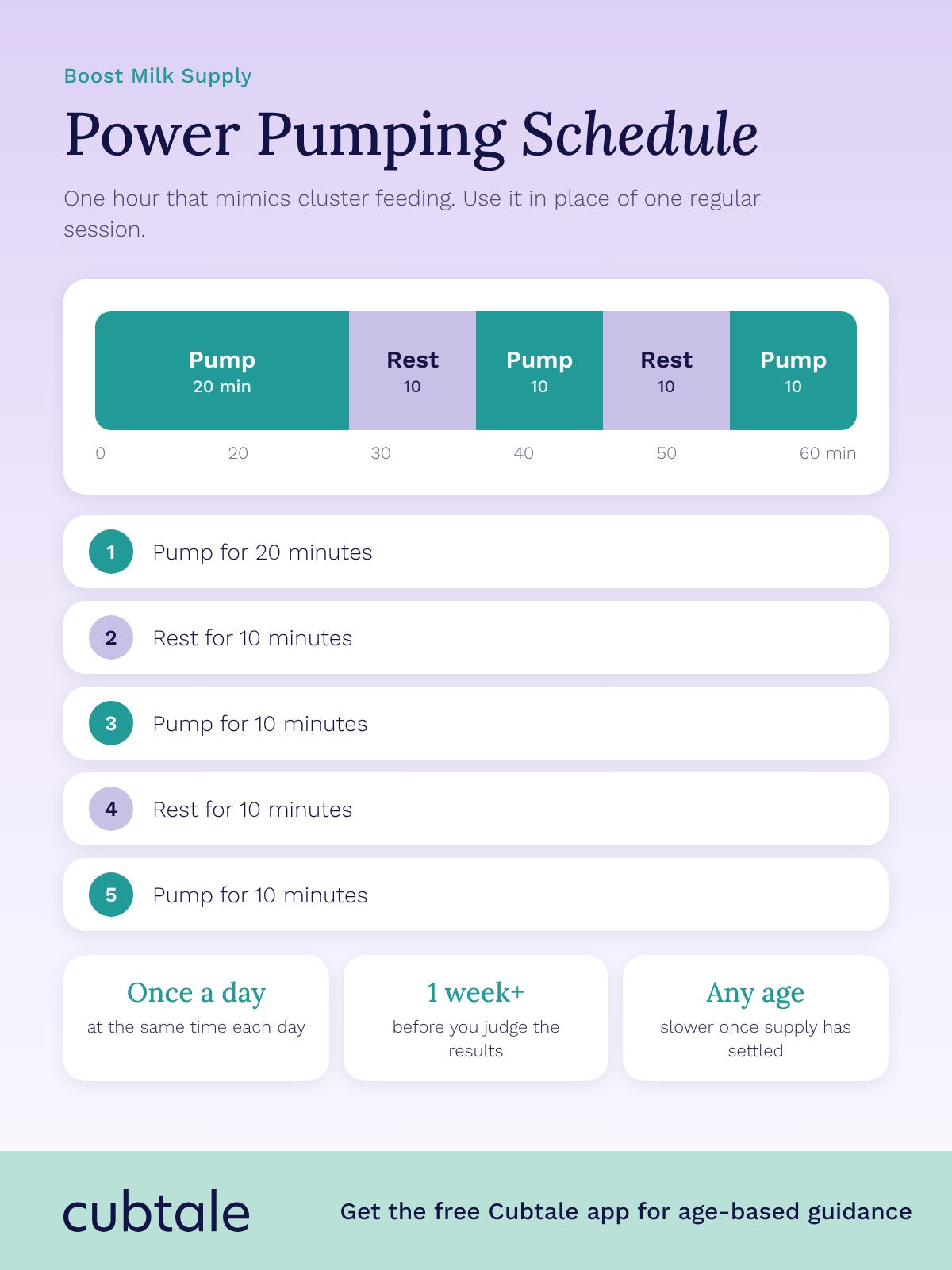
Power pumping is one hour of pumping in short bursts, with rest in between. It copies cluster feeding and tells your body to make more milk.
- Pump 20 minutes, rest 10, pump 10, rest 10, pump 10.
- Do it once a day, in place of a regular session.
- Keep it up for at least a week.
- After 3 months, give it about 2 weeks.
What Is Power Pumping
What Is Power Pumping and Does It Work?
Power pumping copies the way newborns cluster feed during growth spurts. Instead of one 20 to 30 minute session, you pump in short bursts over an hour. The repeated stimulation sends a strong signal: make more milk.
Does It Work?
Yes, for most moms, when done consistently. One session won't change your supply. Repeat it daily to reset your body's baseline.
Who It Helps
- Pumping moms with a supply dip
- Moms going back to work
- Moms building a freezer stash, with numbered labels
- After illness, stress or missed sessions
Realistic Expectations
It won't double your supply overnight. Many moms see a change within a week. If nothing changes after about 10 days, talk to a lactation consultant.
Power Pumping Schedules
Power Pumping Schedules: 45, 60 and 75 Minutes
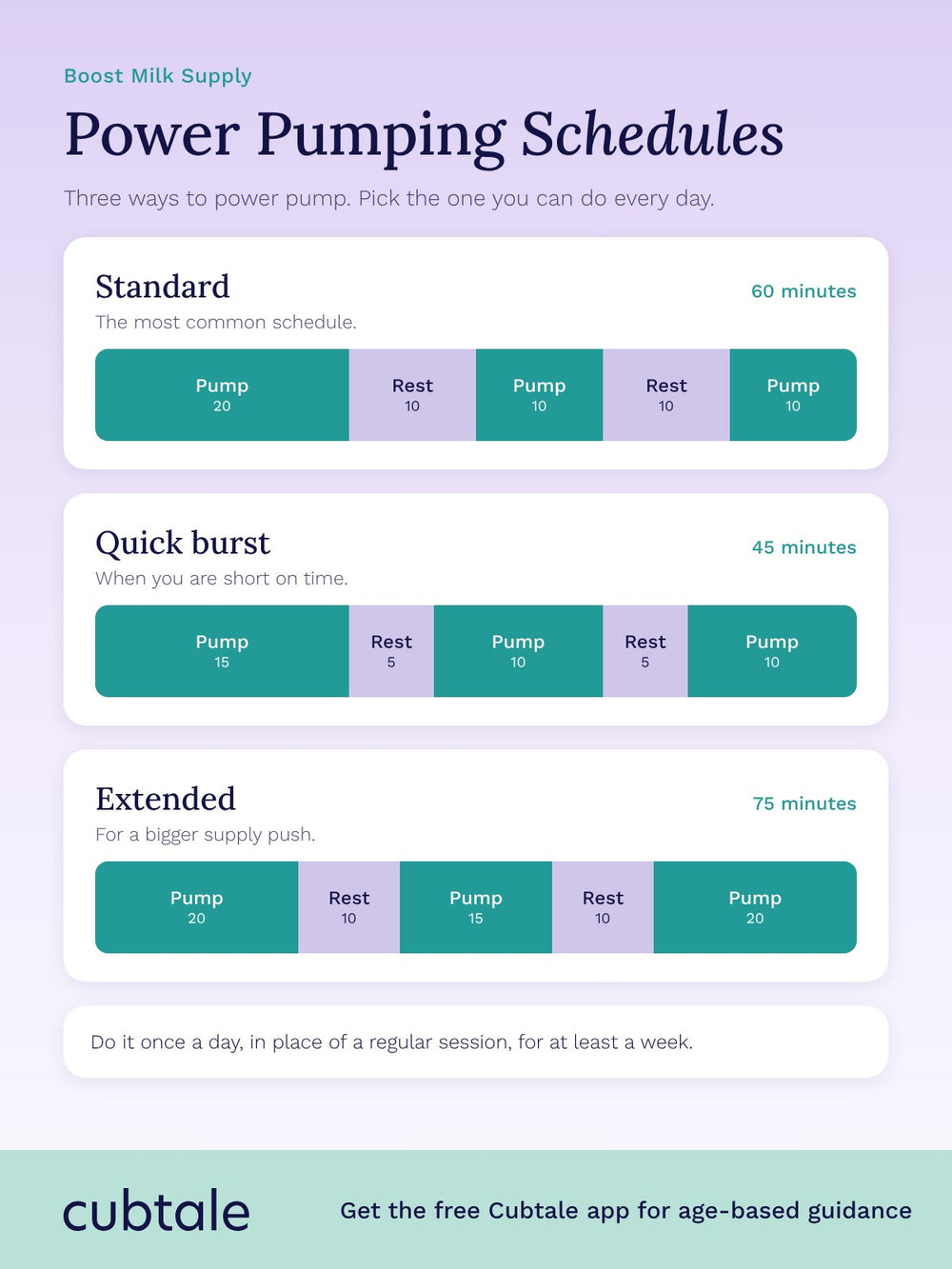
The standard power pumping schedule takes 60 minutes: pump 20, rest 10, pump 10, rest 10, pump 10.
Short on time, or want a bigger push? Use one of these instead.
Quick Burst, 45 Minutes
Pump 15, rest 5, pump 10, rest 5, pump 10.
Extended, 75 Minutes
Pump 20, rest 10, pump 15, rest 10, pump 20.
Replace, Don't Add
Use a power pumping hour in place of a regular session. Your body needs recovery time too.
Full Pumping Schedule
Sample Pumping Schedule with Power Pumping
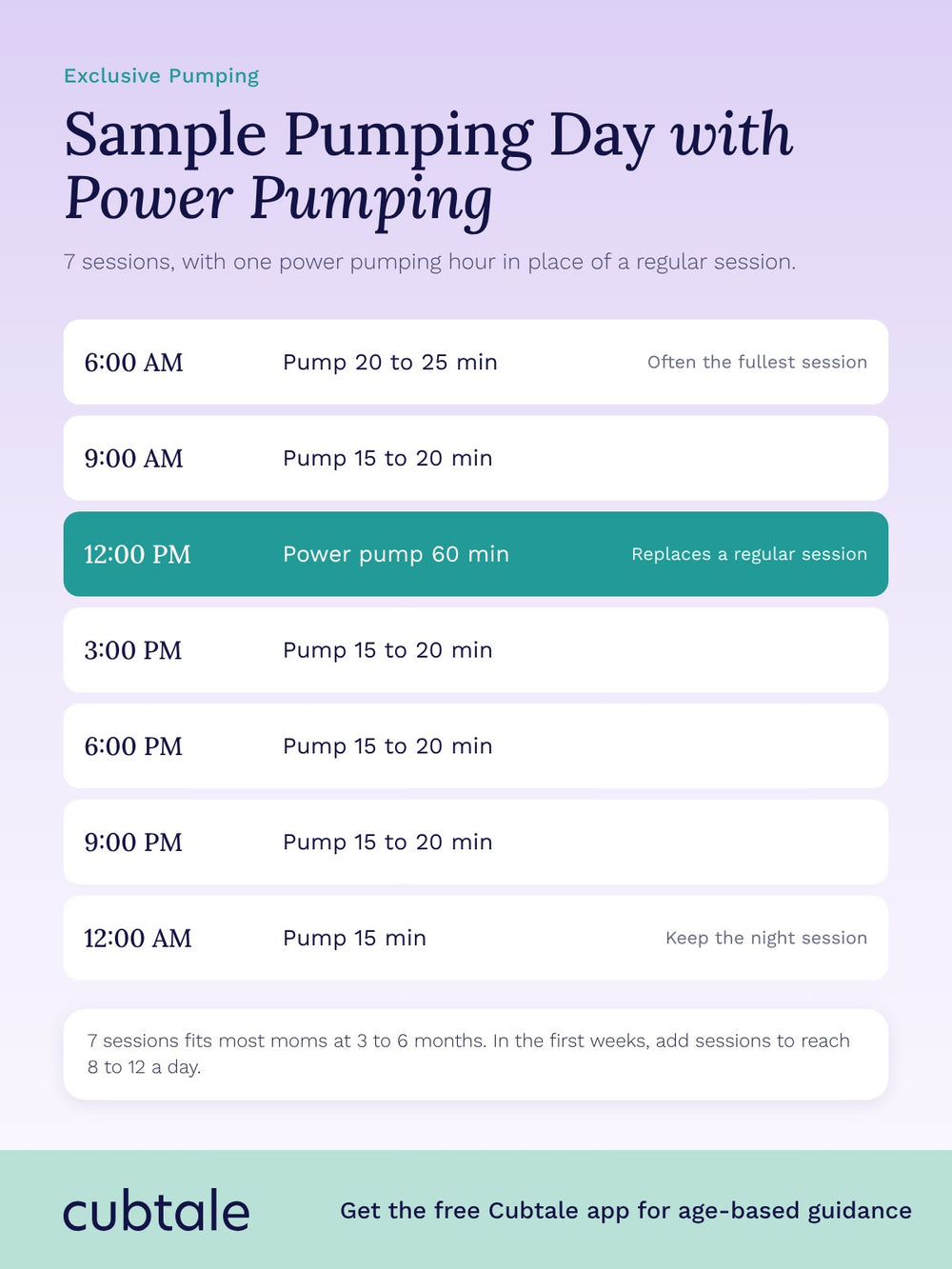
Power pumping works best inside a steady daily routine. This sample day has 7 sessions, with one power pumping hour at noon.
7 sessions fits most moms at 3 to 6 months. In the first weeks, add sessions to reach 8 to 12 a day. As supply settles, most moms drop to 6, then 5 sessions. See how often to pump by baby's age.
Keep the Night Session
Prolactin is highest at night. If you drop a session, drop a daytime one.
Same Time Each Day
Power pump at a time you can repeat every day. Consistency matters more than the time you pick.
Store the Extra Milk
Storing the Extra Milk from Power Pumping


Power pumping often means more bags. Freeze 2 to 4 ounces per bag, label each one with the date, and use the oldest milk first.
Cubtale breast milk storage bags come with 100 numbered labels, and the labels work with any bag brand.
If you have extra milk you already plan to freeze, use our Milk Storage Bag Calculator to estimate storage supplies. Start with the amount available after your baby’s feeds.
Split a Session into Numbered Bags
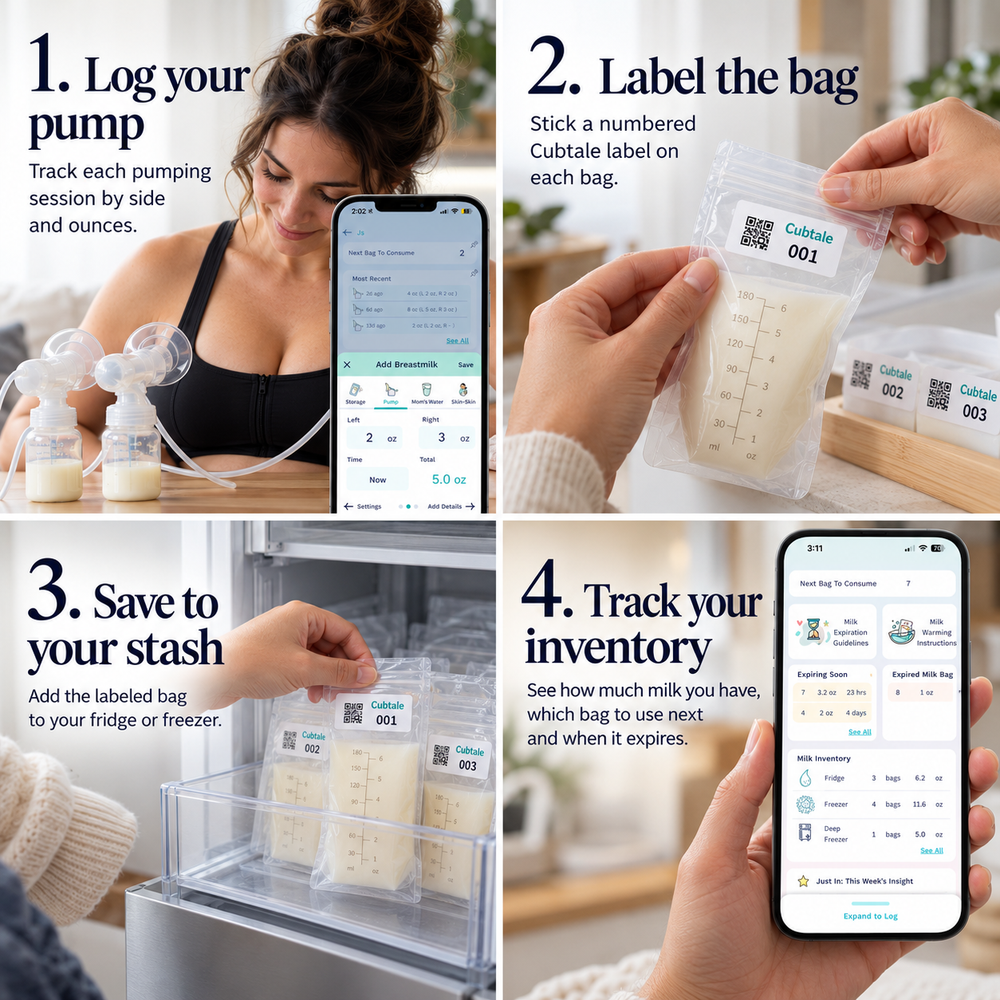
Pumped more than one bag? Save each one as its own numbered bag, so every bag in your freezer matches a real session.
Label Once, Sync to Your Stash
Stick a numbered Cubtale label on the bag and enter the number in Cubtale. The amount, date and location are saved. No handwriting.
Oldest First, Before It Expires
Cubtale tells you which bag to use next and alerts you before milk expires, using the breast milk storage guidelines.
How Often
How Often Should You Power Pump?
Once a Day
The standard advice. Replace one regular session with a 60 minute power pump.
Twice a Day?
Some moms do it twice a day during a big dip. It is tiring, so keep it short.
Give It a Week
Keep it up for at least a week before you judge the results.
Every 2 Hours?
Pumping every 2 hours, 8 to 10 times a day, is one of the best ways to increase supply, especially in the early weeks.
Every Hour?
Not recommended. Your breasts need time to refill. Stick to every 2 to 3 hours for regular sessions.
Avoid Burnout
Exhaustion and stress lower supply. A schedule you can keep beats one you give up in a week.
After 3 Months
Does Power Pumping Work After 3 Months?

Yes, but it can take longer. In the first 6 to 8 weeks, supply responds quickly. After 3 months, supply has settled and changes more slowly.
Give It 2 Weeks
Aim for about 2 weeks of daily power pumping instead of 1.
Jumpstart It
Power pump twice a day for the first few days, then go back to once a day.
Combine It
Add fluids, enough food and skin-to-skin. See more ways to increase milk supply.
Track Ounces
Softer breasts at 3 to 4 months are normal. Track your output to know if a real dip is happening.
First 6 Weeks
Breastfeeding and Pumping Schedule for Newborns
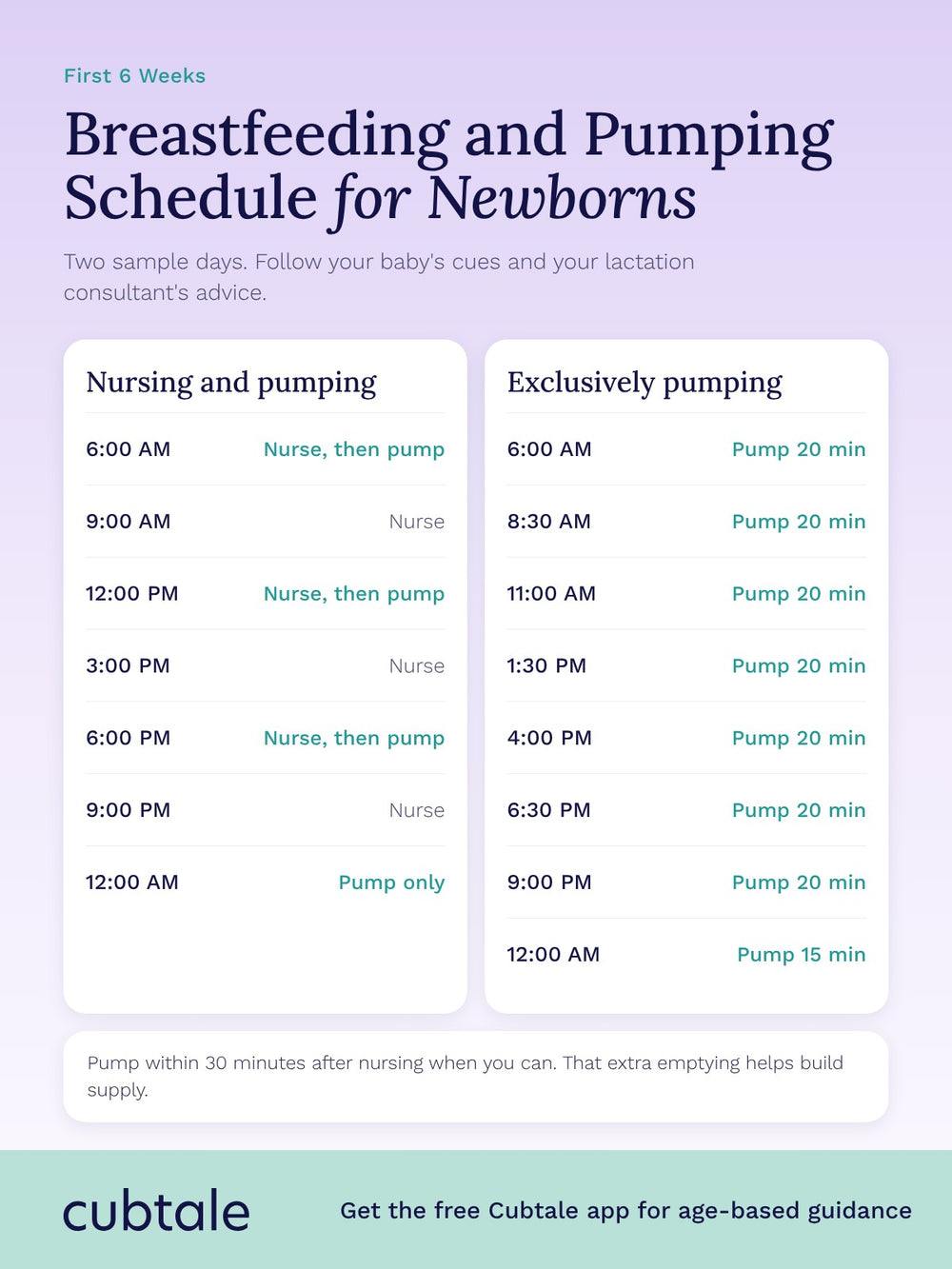
If you nurse and pump, timing matters. These are two sample days for the first 6 weeks. Follow your baby's cues and your lactation consultant's advice.
Older baby? See the pumping schedule by age.
Nursing and Pumping
Nurse, then pump within 30 minutes, a few times a day. That extra emptying helps build supply.
Exclusively Pumping
About 8 sessions a day, every 2.5 hours, including one at night.
Get More Milk
How to Get More Milk When Pumping
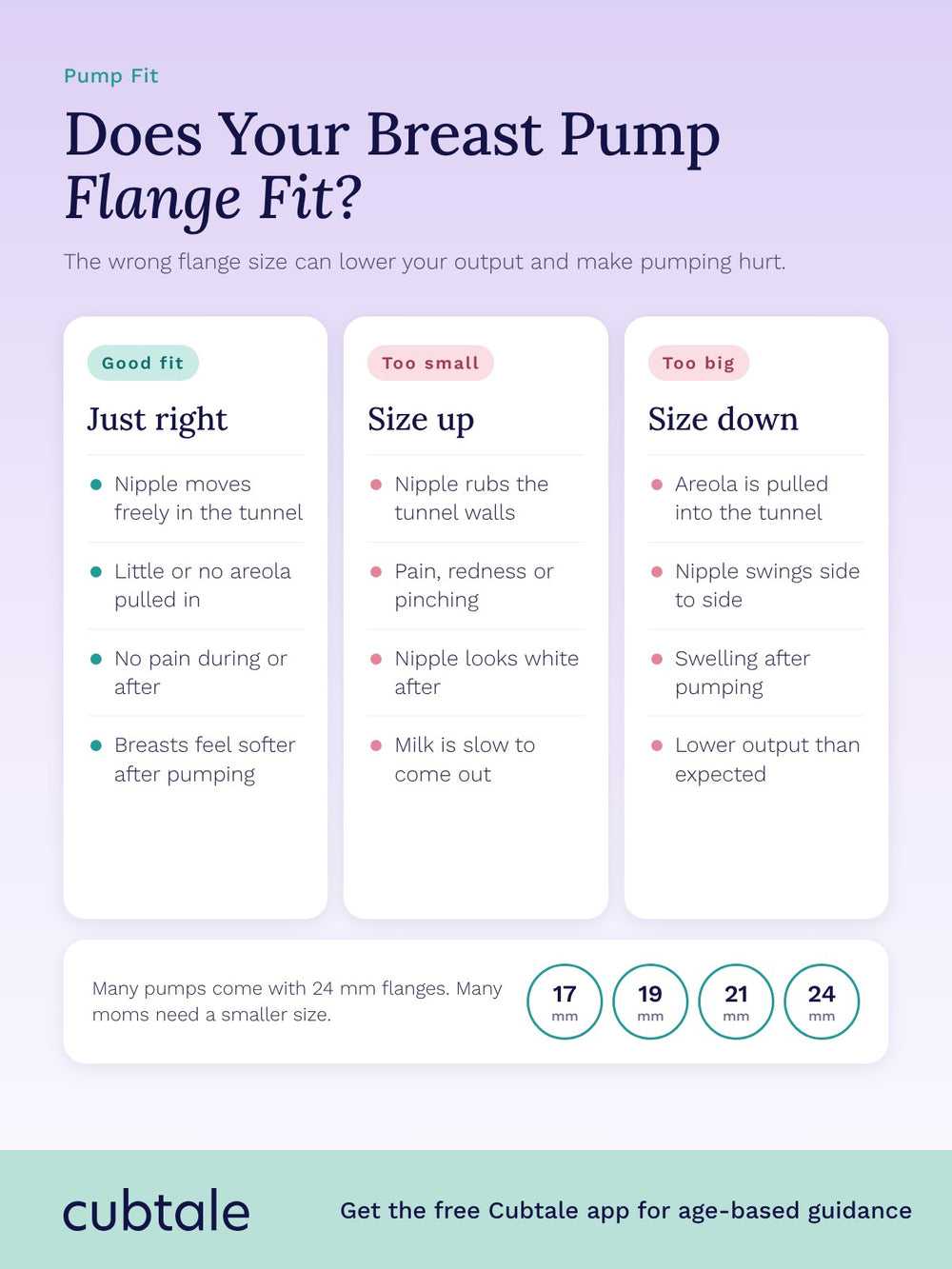
Small changes during and between sessions add up.
Check Your Flange Size
A flange that doesn't fit is one of the most missed causes of low output.
Start with Letdown Mode
Use it for about 2 minutes before switching to expression mode.
Massage While You Pump
Gently compress your breast during the session to empty more fully.
Look at Your Baby
A photo or video of your baby helps letdown.
Drink Enough
Aim for about 12 cups of fluids a day.
Track Your Output
Log each session so you can see what is working.
Custom Pumping Schedule
Your Custom Pumping Schedule in Cubtale
Figuring out when to pump is one of the hardest parts of pumping, especially with a newborn, work and little sleep. Tell Cubtale when you wake up and go to sleep. It builds a pumping schedule around your day and spaces your sessions evenly.
Set Your Day
Add your wake and sleep times.
Get Your Schedule
Cubtale suggests the number of sessions for your baby's age and goals.
Reminders
Get a reminder for each session, so you don't go too long between pumps.
Adapts with You
Back to work or baby sleeping longer? Update your day and the schedule changes.
Numbered Labels
Every pumped bag links to your stash and its expiration date. See the labels.
Power Pumping FAQ
What is power pumping?
Power pumping is one hour of pumping in short bursts with rest in between, such as pump 20, rest 10, pump 10, rest 10, pump 10. It copies cluster feeding to tell your body to make more milk.
How many times a day should I power pump?
Once a day, in place of one regular session. Only go to twice a day during a big supply dip, and only for a few days.
How long does power pumping take to work?
Many moms see a change within a week. After 3 months, it can take about 2 weeks. If nothing changes after about 10 days, talk to a lactation consultant.
What time of day is best for power pumping?
Whenever you can do it every day. Many moms choose the morning, but doing it consistently matters more than the time.
Can I power pump if I'm also breastfeeding?
Yes. Power pump after a feed, not instead of one. Your baby nurses first, and power pumping adds extra demand.
Will pumping every 2 hours increase milk supply?
Yes, for most moms, especially in the early weeks. Pumping every 2 hours is close to how newborns cluster feed.
Does power pumping work after 3 months?
Yes, but it takes longer once supply has settled. Give it about 2 weeks and track your ounces, not how full you feel.
What should I do with the extra milk from power pumping?
Freeze 2 to 4 ounces per bag, label each bag with the date, and use the oldest milk first. Frozen breast milk is best within about 6 months. See the breast milk storage guidelines. Cubtale labels track every bag for you.
What is a pumping log, and do I need one?
A pumping log records the time, length and ounces of each session, so you can see your supply trend. Cubtale keeps it for you, so you don't need a paper chart.
Pumping Guides
More Pumping Guides
Breast Milk Storage
How long breast milk lasts at room temperature, in the fridge and in the freezer.


