


Increase Breast Milk Supply
How to Increase Milk Supply: Pumping, Foods and Practical Tips
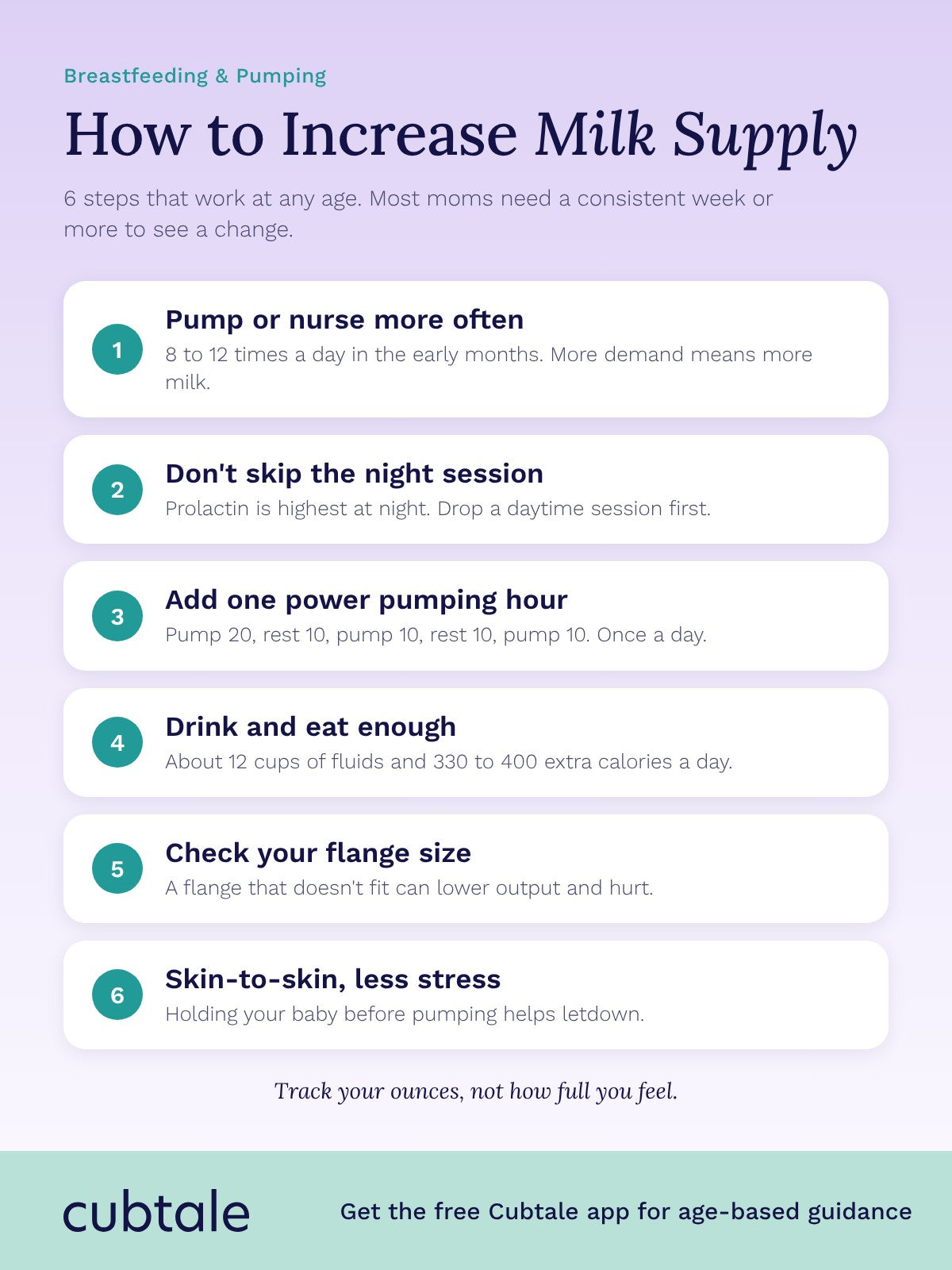
Breast milk works on supply and demand. To increase milk supply:
- Pump or nurse 8 to 12 times a day in the early months.
- Don't skip the overnight session.
- Add one power pumping hour a day.
- Drink about 12 cups of fluids and eat enough.
- Check your flange size.
- Do skin-to-skin and lower stress where you can.
Most moms need a consistent week or more to see a change.
Is My Supply Low?
Is My Milk Supply Really Low?
Many moms think their supply is dropping when it isn't. Check these first.
Softer Breasts Are Normal
Around 6 to 12 weeks, supply settles and breasts feel softer. That alone doesn't mean low supply.
Track Ounces, Not Feelings
Log your output for several days. A steady drop in your daily total is a real dip.
How Supply Works
More milk out means more milk made. Prolactin makes milk and is highest at night. Oxytocin releases it and responds to your baby.
When to Get Help
Talk to a lactation consultant if nothing changes after about 10 days, if pumping hurts, or if you're worried about your baby's weight.
Common causes of a real dip: too few sessions or a skipped night session, not enough fluids or calories, a flange that doesn't fit, and stress. Each is covered below.
0 to 3 Months
Building Milk Supply: 0 to 3 Months
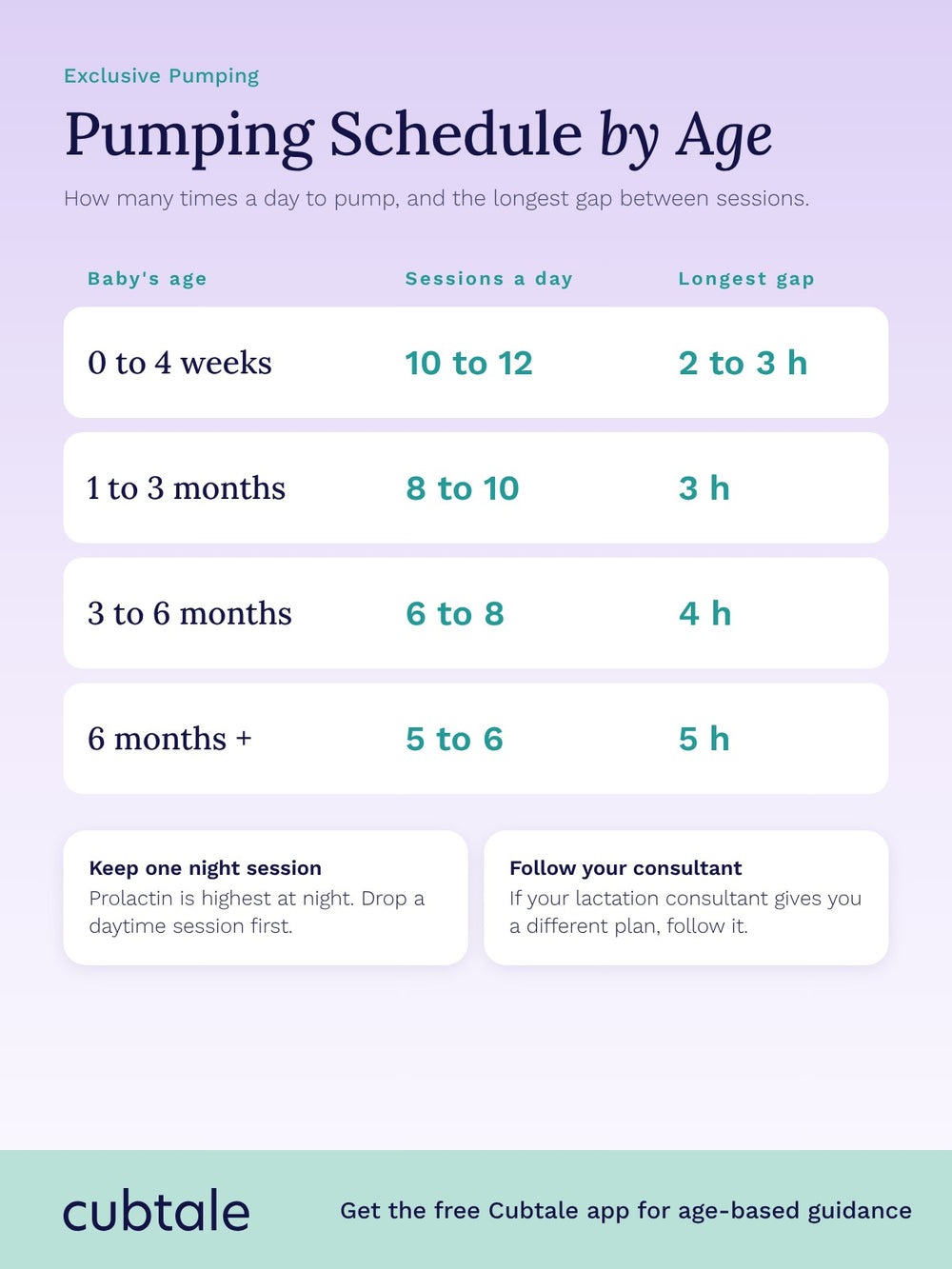
The first weeks set your supply. Pump or nurse often and keep gaps short.
- 0 to 4 weeks: 10 to 12 sessions a day, no more than 2 to 3 hours apart.
- 1 to 3 months: 8 to 10 sessions a day, no more than 3 hours apart.
See a sample day for each age in our pumping schedule by age.
Keep the Night Session
Prolactin is highest at night. If you need fewer sessions, drop a daytime one first.
Empty Fully
Gently massage and compress your breast while you pump to empty more fully.
Plan Sessions Around Your Day
Cubtale builds a pump schedule around your wake and sleep times and reminds you.
3 to 6 Months
Milk Supply at 3 to 6 Months
Supply settles around 6 to 12 weeks, so breasts feel softer. That is normal. Most moms pump 6 to 8 times a day now, no more than 4 hours apart.
Real dips at this stage usually come from dropping sessions too early or going back to work.
Add One Session Back
If output drops, add a session and try power pumping for a week.
Pumping at Work
Pump about every 3 hours. Bring a photo of your baby, use a hands-free bra and keep water at your desk. Missed a session? Add one back in the evening.
Planning your return to work? Our Return-to-Work Milk Planner helps you compare saved milk and expected pumping with the bottles your baby usually takes while you’re apart.
6 to 12 Months
Milk Supply at 6 to 12 Months

Most moms pump 5 to 6 times a day now, no more than 5 hours apart. Supply often dips when sessions drop too fast or when solids start.
You can still increase supply. Supply responds more slowly as your baby gets older, so give changes more time.
At 6 Months
Power pump for 5 to 7 days and add sessions. Most moms see a change within about 2 weeks.
At 10 Months
The same tools work: more sessions, power pumping, fluids and less stress. Expect 2 to 3 weeks before you see a change.
Power Pumping
Power Pumping Schedule to Boost Supply
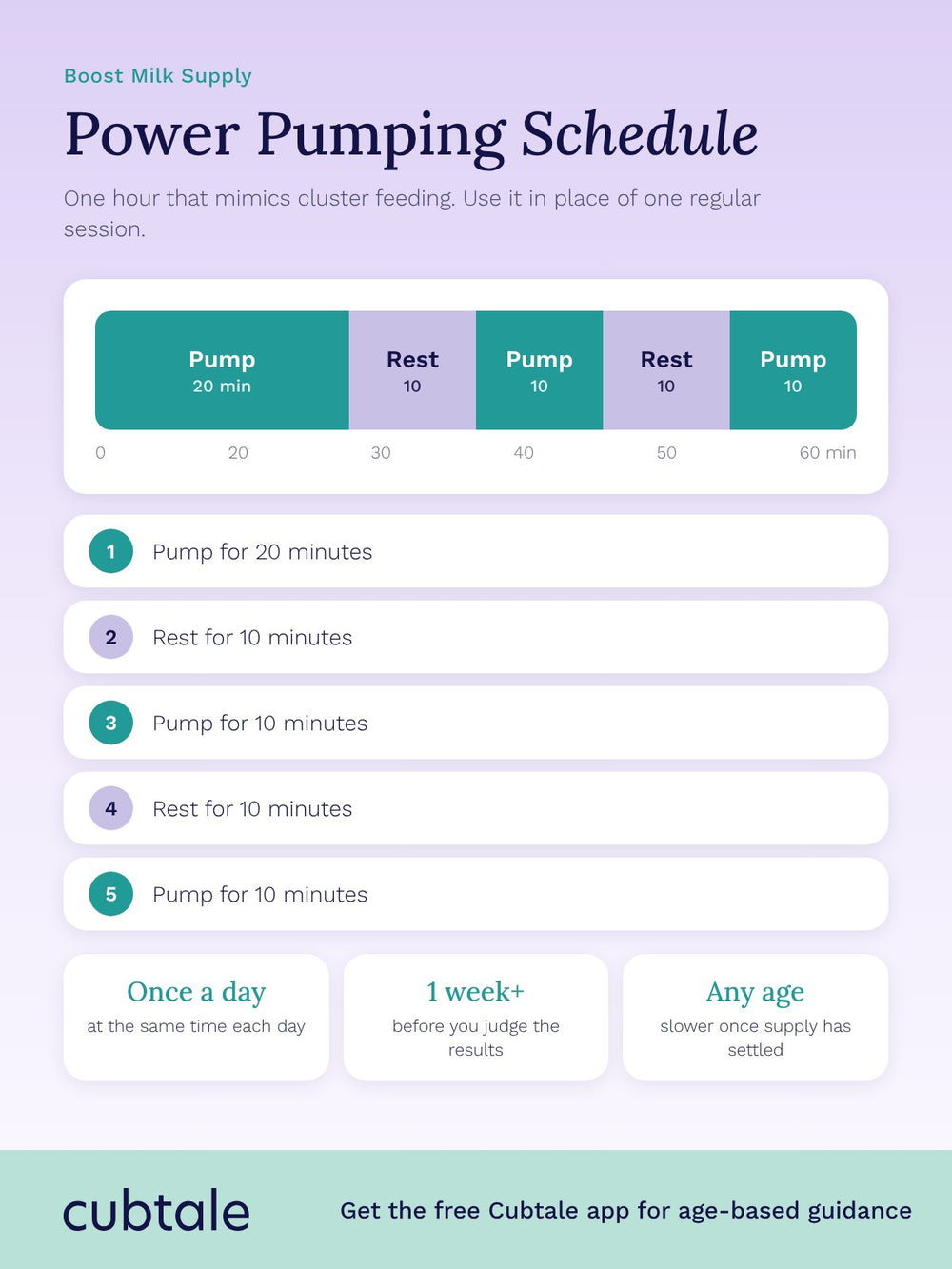
Power pumping copies cluster feeding. Pump 20 minutes, rest 10, pump 10, rest 10, pump 10. Do it once a day in place of a regular session.
Keep it up for at least a week. It works at any age, but takes longer once supply has settled.
Foods and Drinks
Foods to Increase Breast Milk Supply
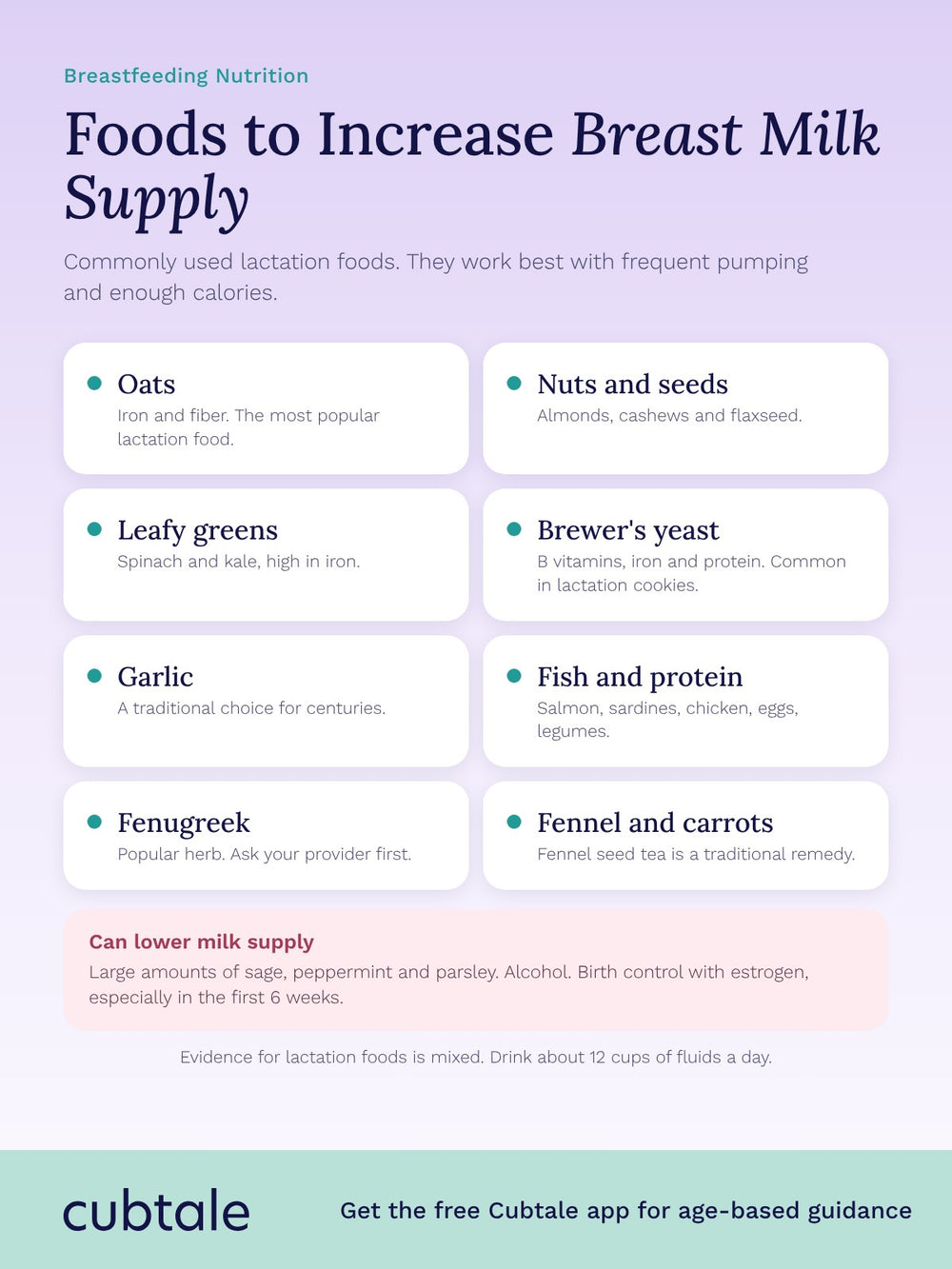

Oats, nuts and seeds, leafy greens, brewer's yeast, garlic, fish, fenugreek and fennel are commonly used to support supply. The evidence is mixed, so food works best alongside frequent pumping and enough calories. Read more about galactagogues.
Fenugreek
The most popular herb. It can cause stomach upset or allergic reactions, so ask your provider first.
Can Lower Supply
Large amounts of sage, peppermint and parsley. Alcohol. Birth control with estrogen, especially in the first 6 weeks.
Water and Calories
How Much to Drink and Eat for Milk Supply

Breast milk is about 87% water. Aim for about 3 liters (12 cups) of fluids a day, including water-rich foods, and drink to thirst. Drink a glass of water at every pumping session.
Making milk takes about 330 to 400 extra calories a day. Eating less to lose weight is a common reason supply drops.
Check Your Urine
Light yellow urine is a good sign you are drinking enough.
Flange and Pump Problems
Flange Size and Pump Technique
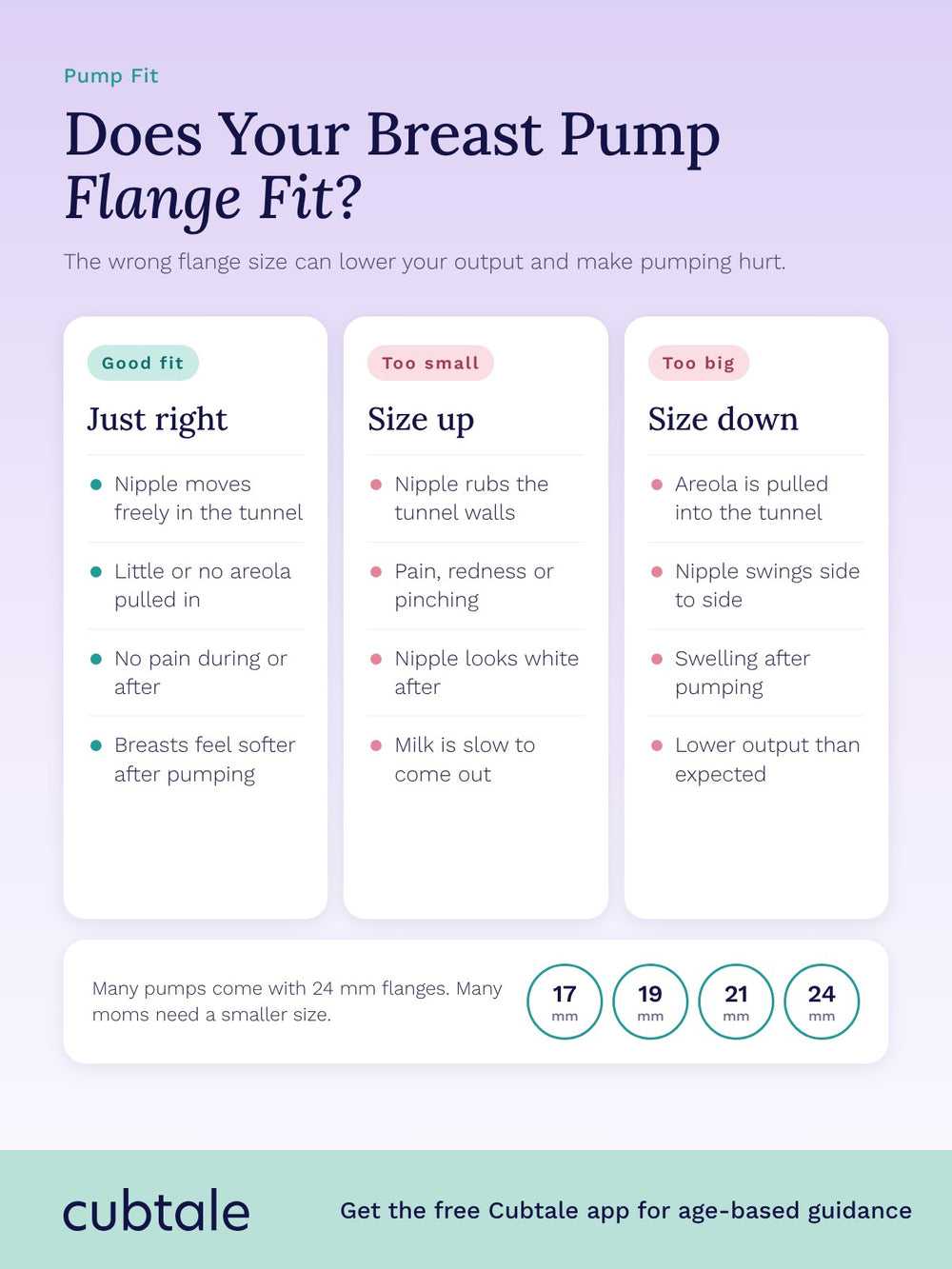

A flange that doesn't fit is one of the most missed causes of low pumping output, and one of the easiest to fix. Your nipple should move freely in the tunnel without rubbing, and little or no areola should be pulled in. Many pumps come with 24 mm flanges, but many moms need 21, 19 or 17 mm.
Start in Stimulation Mode
Use it for 1 to 2 minutes before switching to expression mode.
Comfortable Suction
Use the highest setting that is still comfortable, not the maximum.
Replace Worn Parts
Check membranes and valves every 2 to 3 months. Worn parts lower suction.
Stress and Letdown
Stress, Sleep and Letdown

Stress hormones slow letdown, even when you pump on the same schedule. These help your milk flow.
Skin-to-Skin Before Pumping
A few minutes with your baby raises oxytocin and helps letdown.
Look at Your Baby
Photos or videos of your baby help when you are apart.
Warmth and Massage
A warm compress or gentle massage before a session helps start letdown.
Share the Night Shift
A partner who takes a feed gives you more rest. Cubtale keeps everyone on the same log.
NICU Pumping
Pumping for a NICU Baby

Keeping up your supply while your baby is in the NICU is one of the hardest situations for a pumping mom. Your NICU team will give you a plan. It often includes these steps.
Start Early
Begin pumping within 1 to 6 hours of birth if you can.
Pump 8 or More Times a Day
Include at least one overnight session. A hospital-grade double electric pump helps.
Kangaroo Care
Hold your baby skin-to-skin as much as the NICU allows. Bring a photo or worn clothing to pumping sessions.
Track Every Session
Clear logs help your care team follow your supply. Cubtale is being tested in hospitals to support breastfeeding for NICU babies.
Milk Supply Tracker
Track Your Milk Supply with Cubtale
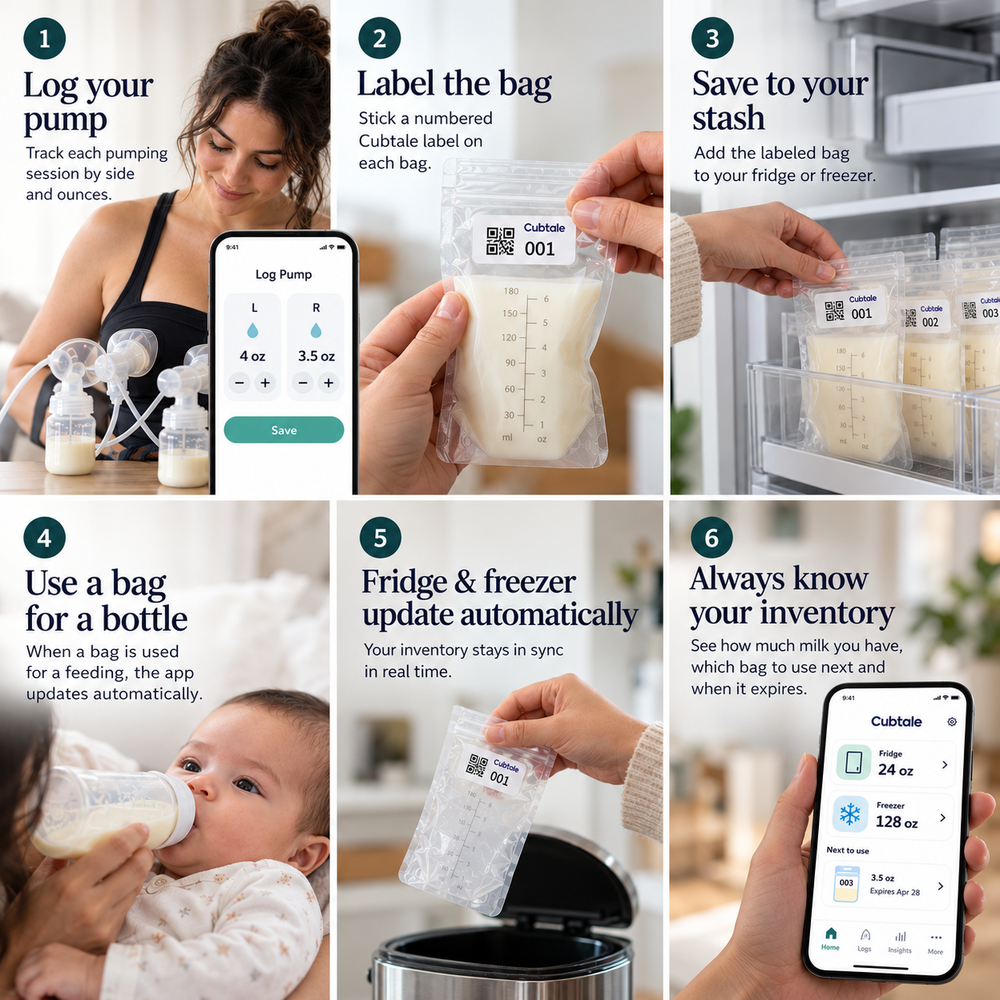
Supply changes slowly, and it is easy to miss a dip. Cubtale is a pumping tracker app that logs every session by side and ounces, shows supply charts, and tracks habits that support supply, like water and skin-to-skin.
Supply Charts
See your output by day and by session.
Pump Schedule and Reminders
Cubtale spaces your sessions around your day and reminds you.
Daily Supply Goals
Set a daily ounce target and track your progress.
Share with Your Village
Your partner, family, nanny or NICU nurse sees the same log.
Milk Supply FAQ
How can I increase my milk supply quickly?
Pump or nurse more often, add one power pumping session a day, drink enough and don't skip the overnight session. Most moms need a consistent week or more to see a change.
Does pumping increase milk supply?
Yes. Pumping removes milk and signals your body to make more. More frequent sessions and fully emptying your breasts increase supply over time.
How often should I pump to increase my milk supply?
In the first 12 weeks, exclusively pumping moms usually pump 8 to 12 times a day, no more than 3 to 4 hours apart, including once overnight. See the pumping schedule by age.
What foods increase milk supply?
Oats, brewer's yeast, flaxseed, leafy greens and fenugreek are commonly used. The evidence is mixed. No food works alone, so eat enough calories, drink enough and keep pumping often.
How much water should I drink to increase milk supply?
About 3 liters (12 cups) of fluids a day, including water-rich foods. Drink to thirst. Light yellow urine is a good sign you are drinking enough.
Can the wrong flange size lower milk supply?
Yes. A flange that is too big or too small can lower output and cause pain. Your nipple should move freely in the tunnel without rubbing.
How do I increase milk supply when pumping at work?
Keep your session schedule as close as you can, about every 3 hours. Bring a photo of your baby, use a hands-free pumping bra and keep water at your desk. If you miss a session, add one back in the evening.
How do I know if my milk supply is actually low?
Softer breasts are not a reliable sign, especially after supply settles around 6 to 12 weeks. Track your ounces over several days. A steady downward trend is a real dip.
Can you increase milk supply at 4, 6 or 10 months?
Yes. The earlier you start, the faster your body responds. At 4 to 6 months, most moms see results in 1 to 2 weeks. At 10 months it takes longer, but it is still possible.
When should I see a lactation consultant?
If your supply hasn't changed after about 10 days of consistent changes, if pumping hurts, or if you are worried about your baby's weight, talk to a lactation consultant or your provider.
How can Cubtale help me increase my milk supply?
Cubtale logs every pumping session, shows your supply trend, builds a pump schedule with reminders and tracks habits like water and skin-to-skin. Cubtale is free to download on iPhone and Android. Some features need Cubtale Premium.
Pumping Guides
More Pumping Guides
Breast Milk Storage
How long breast milk lasts at room temperature, in the fridge and in the freezer.


